Poetry is a part of every student’s school experience, whether its childhood rhymes, silly haikus and limericks, or trying to write essays on poems for senior exams.
A lot of students don’t enjoy poetry because they find it hard and confusing. But it doesn’t have to be.
We study poetry in school because it offers a different experience of language and expression of what it means to be human – different than other kinds of writing.
POETRY IS EFFICIENT
Poetry is very compressed. Every word matters in a poem. It needs to perform many functions, contributing to the form, sound, imagery and meaning. This is why reading a poem takes time. We need to experience and understand how the words work together to create the reader’s experience.
POETRY USES WORDS IN INTERESTING WAYS
Poets play with language. They need to, to make the most of their words, but they also do it because it’s fun. Rules like grammar are flexible and poets often stretch them, even break them. Using unusual vocabulary can help create the specific experience the poet is striving for. Changing the context of words is also fun. We can understand and experience familiar words in new ways, altering the meanings the poem has. A fresh metaphor is a good example of how putting two common words together in an uncommon way can result in poetry ‘magic’!
POETRY RELIES HEAVILY ON SOUND
More than any other written text, poetry uses the sound of its words to create meaningful experience. Language features such as rhythm, rhyme, alliteration, assonance, sound clusters and onomatopoeia are essential in giving a poem its force and efficiency. While prose such as novels, short stories and non-fiction use sound-based language features, poetry needs sound to be poetry. Originally poetry was an oral art – poets memorised and then recited or sang the poems out loud to their audiences. Now, with the new popularity of spoken word, poets and their audiences are re-discovering the ways the sound of the words are meaningful – how it matters.
POETRY DOES NOT HAVE TO BE LOGICAL
Just as poets can break the rules of grammar, they can also break the chains of logic. Concepts and ideas in a poem do not have to make rational sense. This can be very frustrating for some readers. Poems have to have some kind of coherence, or inner ‘logic’, and use some frame of reference readers know. Some poems are very logical, but others are focused on emotions and their coherence and common frame of reference might be oblique or unusual. A poem teaches us how to read it. A poem that, with the best effort, has no logic in the sense you want it to have, is a poem that must be understood with your other faculties – your heart, soul, and connection to language.
POETRY IS MORE ABOUT EXPERIENCING THAN UNDERSTANDING
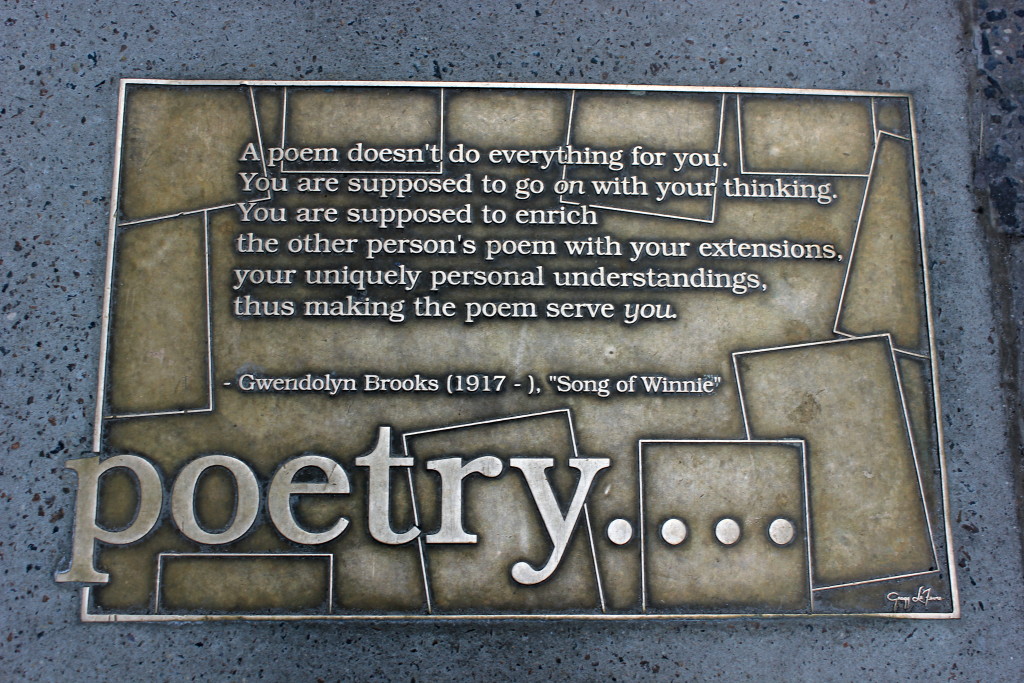
Ultimately, poetry is an experience that is more than intellectual. This can make writing essays about poems difficult until you grasp the difference between experiencing the poem as a reader, which cannot be put wholly into words, and studying the poem as a student of English literature. As a student your job is to figure out how the poet has done their job and write about it. The best combination is of reader and student. You can enjoy and appreciate the poem as a reader, and use that experience to inform your work as a student.
Discover more from Angela's Guide to English Literature
Subscribe to get the latest posts sent to your email.

 Angela's Guide to English Literature